
Falling into Dead Can Dance
An Outsider's Guide decades late

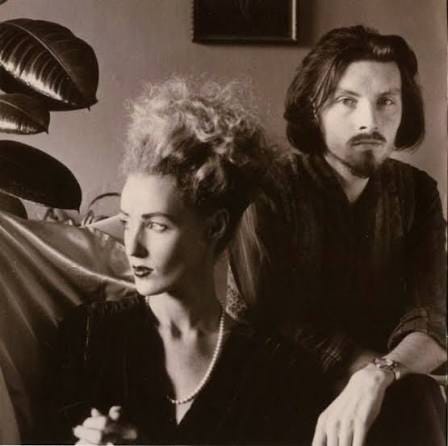
Welcome back Hi-Fiers,
This week I was supposed to drop my epic 27 album deep ratings post on my favorite band The Church. That turned out to be a Herculean task, so it’s still in the works, just not ready yet. Maybe next week.
The pivot? I referred back to a subscriber only chat from earlier this year. This post and last week’s post are pulled directly from suggestions that Dmytro P-ov gave me. Posing the simple question, why haven’t you written about Bauhaus or Dead Can Dance yet. Honestly, I didn’t have an answer for him, not to myself. So I put my big boy pants on, and last week I released my Bauhaus post. Which can only mean, this week it’s Dead Can Dance.
I’ve spent years circling everything this band draws from. Celtic rhythm. Ritual chant. Modal drift. Music that sounds ancient no matter when it was actually made. I’ve heard the name Dead Can Dance for decades, felt the mystique, and never once crossed the threshold into an actual song.
So this week, I tried it.
Before pressing play, I logged a few guesses. A darker, gothier Clannad, chant and atmosphere with the new-age warmth scraped off. The ears I already had: improvisational jazz, Indian classical music, qawwali and Sufi devotional traditions, seeing Ustad Amjad Ali Khan live. The strange, expansive corners of Syd Barrett-era Pink Floyd through Atom Heart Mother. A week deep in Bauhaus, still fresh from last week’s piece.
A while back I wrote about hearing Japan for the first time too, though that piece grew into a full album-by-album deep dive. This one’s staying smaller: the reactions themselves, as close to real time as I can get them down.
The Door I Didn’t Expect
I went looking for the band’s strange, transcendent peak. What actually pulled me in first was the 1984 debut, the record closest to where my ear already lived.
“In Power We Entrust the Love Advocated,” “A Passage In Time,” “The Arcane.” All gothic rock, all post-punk, and Perry’s voice on these sits close enough to Mark Burgess of the Chameleons, and to early Sisters of Mercy, that the kinship feels real. Bauhaus had already broken up by the time this record landed in February 1984. Sisters of Mercy’s debut album was still a year off. The Mission didn’t exist yet. Dead Can Dance’s debut sits right in that gap.
Underneath the gothic surface, I kept hearing something closer to Kraftwerk. Kraftwerk were classically trained musicians who shed their acoustic instruments for machines. Dead Can Dance sound like the mirror image: cellos, timpani, unexpected metal-on-metal percussion, classical and orchestral tools building the same alien, mechanistic textures Kraftwerk got out of synthesizers. Same destination, opposite route.
This same debut era has a song called “East of Eden,” and Big Country released a song with the exact same title, on the exact same theme, the same year, on Steeltown. Both pull from Cain and Abel. Dead Can Dance’s version reads as existential and personal, a band that had just relocated across the world. Big Country’s is Thatcherite industrial Scotland. Same myth, two exiles, 1984.
The Arrival
If the debut was the door, Spleen and Ideal, from a year later, is where I walked through it.
“De Profundis (Out of the Depths of Sorrow)” opens the record like a liturgy, choral and Gregorian. “Mesmerism” pulls somewhere else: tribal drumming under vocalizations that, at different moments, land closer to Ofra Haza or to the great post-colonial Indian playback singers, Asha Bhosle, Lata Mangeshkar, occasionally drifting close enough to Portuguese fado to make you wonder how far the net extends.
“Enigma of the Absolute,” same record, Perry-led, timpani doing melodramatic work under a guitar tone that reached forward to Tortoise for me, a band I wouldn’t find for another decade.
Improvisational jazz runs under all of it, along with the wider world of music that never bothered adhering to Western pop’s chord changes or song shapes. Sufi music. Indian and Middle Eastern modal drift, meditative and repetitive. Unfamiliar instrumentation, sounds pleasant without being comfortable, sometimes genuinely jarring. Dread that is welcomed.
It’s on “Anywhere Out of the World,” the opening track of 1987’s Within the Realm of a Dying Sun, a Perry vocal that reads as pure atmosphere, chiming bells and a sense of vast space. It’s on “Cantara,” the same record, Gerrard, driving and percussive with those unmistakable Oriental overtones. And it’s all over “The Host of Seraphim,” from 1988’s The Serpent’s Egg, Gerrard’s vocalise doing more emotional work with zero intelligible words than most songs manage with a full lyric sheet.
The Cinematic Thread
A lot of this sounds like it’s scoring something. Sword-and-sandal epics, historical drama, fantasy. More than once I caught myself thinking of Game of Thrones, and specifically of Ramin Djawadi’s scoring instincts, the same weight and dread dressed in medieval clothing. “The Host of Seraphim” is the clearest example, one of the most film-placed tracks in the band’s catalogue.
By 1990’s Aion, something else clicked. This is the record where the band sounds most like a true duo, neither voice dominating. “Saltarello” is pure medieval instrumental, a fourteenth-century Italian dance form, no lyrics, gorgeous. “Black Sun,” Perry-led, is one of the record’s real highlights, the same Game-of-Thrones gravity, vocal passages that read as almost Latin in texture.
Four of the eleven songs that grabbed me hardest are Perry leads. The pull was never about who was singing. It was the same handful of qualities showing up again and again: atmosphere, medieval texture, chant treated as instrument, that improvisational, non-Western current underneath. Once I started listening for that instead of for a name, the whole catalogue opened up.
Where This Leaves Me
Eleven songs in, some of these are going to be permanent fixtures on my playlists. I’ve built a public Spotify playlist of the eleven that grabbed me hardest, in case you want to walk the same first pass I just took.
This isn’t a survey of Dead Can Dance’s career. I haven’t earned that yet. It’s a document of first contact, an ear that had been circling this band for twenty years finally finding its way in. There’s more catalogue left to hear, and some of it is going to take real work to land. I’m looking forward to finding out.
Unfortunately, time is not on my side, and I have arrived at this band much passed it’s due date. On further research I found out that Lisa Gerard has left the band. My entire journey here has focused on Lisa Gerard and Brendan Perry as the core duo. Much like Beach House, Everything But the Girl and XX. Without one there can’t be the band. But as the Beatles said after they broke up, “there’s always the records”.
Here is the playlist I created and sharing with all of you, of the songs that grabbed me on my maiden voyage, my first listen.
Before You Go
Further Reading
An Outsider’s Guide to Japan is the last time I did this: a band, cold, first listen, written in real time.
Bauhaus: Architects of Goth sets up a lot of the debut-era material here, and
Kraftwerk: Radio-Activity at 51 goes deeper into the classical-to-machine transition I’m hearing in reverse.
Missed Last Week?
Read my post on Bauhaus: Architects of Goth
Coming Next Week
Fingers crossed: the full tier-ranked walk through The Church’s 27-album discography, S-tier to F. This time, for real. Probably.
Thank you for reading this deep dive. If this piece moved you, taught you something new, or reminded you why music still matters, please consider sharing or restacking it. These stories deserve to be told and remembered.
Leave a like and tell me in the comments: Is this a band you love? What albums or songs are your favorites? Have you seen them live, in which configuration or lienup? Is there a band you've been circling for years without ever actually pressing play? What's stopped you?
Not a subscriber yet?
This is the kind of engaging work I want to keep creating. Subscribe so you don’t miss future deep dives and music explorations.
Support This Work:
HiFi Amateur will always be free to read. But if you find value in these deep dives and curations, upgrading to a paid subscription lets me know this work means something to you. Think of it as a virtual high-five or a nod to the record store clerk—no pressure, just appreciation.
Thank you for always bringing my attention to bands that I've always known about but haven't listened to enough.
This is such an enjoyable read because you never pretend to be an authority—you let us experience the discovery alongside you. I particularly loved how you began by documenting your expectations before pressing play, then allowed the music to reshape them. That's genuine curiosity in action. We've all had artists we've unfairly overlooked, and this is a wonderful reminder that great music waits patiently until we're ready to hear it. I suspect this won't be your last journey into Dead Can Dance.