
Artist Spotlight: Icehouse
Australia’s Electronic Pioneers

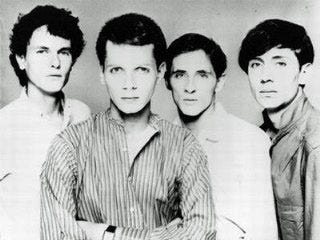
Welcome back Hi-Fiers
This is probably my last proper newsletter of the year. Considering whether or not my last post of the year will be my top 10 favorite albums of the year (in no particular order). Last week’s post was about the early years of Simple Minds, when they were a synth/electronic experimental band. This post, in a way, is the perfect follow-up. It continues a storyline I have been following. It started with John Foxx, who led the new wave of electronic music that was to come. There was a band down under who were innovating along the same lines. While Simple Minds were touring in support of Empires and Dance (their biggest hit album in clubs all around the world) they were asked to open for Icehouse. Simple Minds were relatively unknown worldwide, and Icehouse had already made a name for themselves. Being mentioned in the same breath as David Bowie and Roxy Music. That show would change the trajectory of Simple Minds’ career. This band influenced the album New Gold Dream. So by deduction, they warrant a closer look. Their vocals and their big sound would influence what Simple Minds would become.
MTV and Beyond
Like many US listeners, I only became aware of Icehouse through their MTV hits. “Electric Blue” and “Crazy” had pretty heavy rotation on both the channel and radio in the late ‘80s. Their sound fit perfectly with what I was listening to at the time: U2, Simple Minds, Genesis, and Tears for Fears. My older sister’s Australian best friend was more familiar with them, and through her, I discovered other great songs like “Cross the Border.”
But Icehouse’s story began much earlier, and their influence reached far deeper than those radio hits suggested.
From Flowers to Icehouse: The Rise of Australia’s Electronic Pioneers
The band originally formed in 1977 as Flowers, quickly becoming the highest paid unsigned act in Australia. By 1980, they’d won the Johnny O’Keefe Award for Best New Talent at the Australian Countdown awards. At the core was multi-instrumentalist Iva Davies, though the lineup went through many changes. After discovering numerous other bands shared their name, they changed it to Icehouse in 1981.
Davies was influenced by David Bowie, Roxy Music, and Brian Eno—the holy trinity of art rock—along with Bryan Ferry and Marc Bolan as key vocal inspirations. In their early days as Flowers, their cover sets included Ultravox, Brian Eno, Roxy Music, David Bowie, Lou Reed, and T. Rex. Davies, originally a classically trained oboist, synthesized these influences with his formal music education to create something uniquely Australian yet globally resonant.
Their debut album under the new name, Primitive Man, achieved global success—and opened with what would become Australia’s unofficial national anthem, “Great Southern Land.” The song’s sweeping synthesizers and Davies’ soaring vocals captured something essential about the Australian landscape and identity. It remains one of the most beloved songs in Australian music history.
Davies has been heralded as an electronic music pioneer, becoming one of the earliest adopters of the Fairlight CMI synthesizer, that groundbreaking digital sampler that revolutionized ‘80s production. His experimental approach caught the attention of Brian Eno, who would later collaborate with the band in 2006.
On the heels of Primitive Man‘s success, Icehouse embarked on a successful international tour and even supported David Bowie during his Serious Moonlight tour. For Simple Minds, opening for Icehouse in Australia proved transformative—Davies’ combination of classical training, electronic innovation, and anthemic songwriting showed them a path forward from their experimental roots toward the stadium-sized sound they’d perfect on New Gold Dream.
Essential Albums
Primitive Man (1982)
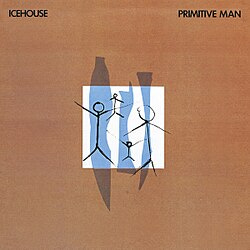
Primitive Man was essentially Iva Davies’ solo vision brought to life. Davies recorded it largely alone, supplying vocals, lead guitar, keyboards, bass guitar, and programming the Linn drum machine, while co-producing with Keith Forsey, who would later work with Simple Minds and Billy Idol. This was the first album released under the band name Icehouse. Critics raved about the album; it had the sounds of Gary Numan, early-Ultravox, and Bryan Ferry.
The tracks that standout:
Great Southern Land -
A strong opening to any album. The song’s sweeping synthesizers and Davies’ soaring vocals captured something essential about the Australian landscape—its vastness, its beauty, its isolation. It became Australia’s unofficial national anthem, a song that still resonates deeply with Australians today.
Hey Little Girl
Sometimes when algorithms work? This popped up on a Spotify playlist or recommendation about 10 or 15 years ago, and stopped me in my tracks. Who was this band? I was surprised to find it was Icehouse, a band I already knew, and began my exploration into their past. It’s become one of my favorite songs of theirs.
This became an international hit, reaching #2 in Switzerland, #5 in Germany, and the top 20 in the UK. The song showcases Davies’ ability to craft pop hooks without sacrificing sophistication. His vocal delivery—influenced by Bryan Ferry and Marc Bolan—walks the line between vulnerability and theatrical grandeur.
Critics hailed it as the second coming of Avalon, comparing it favorably to Roxy Music, and described it as the missing link between the robot squad like Gary Numan and Ultravox, and the new romantics. The album artwork drew on themes of primitive cave art, suggesting a connection between ancient expression and cutting-edge electronic music.
Uniform
This is the song where I hear Gary Numan more than in Hey Little Girl. The intersection of both John Foxx’ and Midge Ure’s version of Ultravox. But also the Berlin-era David Bowie, rather than the Avalon-era Roxy Music. I’d say later albums like Man of Colours may have more of an Avalon sound than this album.
Trojan Blue
I have to give this song an honorable mention. The intro to this song makes it sound like an outtake of The Cure’s Faith album. But the bassline and atmosphere sound like something off my favorite album by The Church, Priest = Aura, particularly the song Ripple from that album.
But the keyboard arpeggio sounds like At Night, from The Cure’s Seventeen Seconds.
Sidewalk (1984) - The Bowie Connection
What always struck me about Icehouse was Ira Davies’ voice, hitting that Bowie baritone. So it’s no surprise that he cites David Bowie, Marc Bolan and Bryan Ferry, and Velvet Underground, as his influences. Critics noted the album’s style reflected influences from David Bowie and Roxy Music, particularly in Davies’ theatrical, emotive vocal delivery. This is the era when Davies fully embraced his art-rock influences, channeling that glamorous, slightly decadent energy that defined pop-era Bowie. Some reviews even mentioned it sounding like Bryan Ferry’s Avalon-era work—high praise indeed.
The album featured the Fairlight CMI heavily in its production, and interestingly, bassist Guy Pratt worked on this album and would later collaborate with Pink Floyd, Roxy Music, David Bowie, Madonna and Michael Jackson—another example of how interconnected this musical world was. Pratt was clearly drawn to artists who understood how to marry electronic innovation with emotional depth.
I don’t have any songs to showcase, but I just feel it’s important to note the innovation from this era.
This video gives an idea of how their sound was ever evolving, but synthpop was at the heart of it.
No Promises (1986)
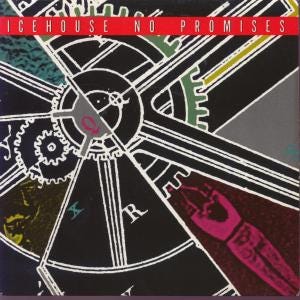
This album has a couple of my favorite songs on it too.
Released in 1986, Measure for Measure was one of the first three albums recorded entirely digitally. The album showcased Icehouse at their most sophisticated, with Davies pushing the boundaries of what could be achieved with emerging technology. Two tracks particularly stand out: “No Promises” and “Cross the Border.”
No Promises (The Sparks Connection)
This song had an interesting origin—it was originally written for the Boxes ballet collaboration with Sydney Dance Company, demonstrating Davies’ classical training and his ability to compose beyond traditional pop structures. The song’s sweeping, cinematic quality makes perfect sense given its theatrical roots. Both tracks went Top 10 on Billboard’s Rock and Dance/Club charts.
The recording of Measure for Measure brought together an intriguing international collaboration. Davies met drummer Steve Jansen from the band Japan while touring with Yukihiro Takahashi, the legendary drummer and vocalist from Yellow Magic Orchestra. Takahashi was a towering figure in electronic music—a pioneer who influenced countless musicians and crossed paths with acts like Sparks, who paid tribute to him upon his passing in 2023. This connection between Icehouse, Japan, YMO, and even Sparks illustrates how the synth-pop world of the 1980s was a tightly woven tapestry of mutual inspiration.
Unfortunately, this is when Iva Davies permed mullet became his identifying image.
Cross The Border
This is perhaps the most enigmatic track on Measure for Measure. Also, my favorite song of theirs. The lyrics explore themes of freedom, escape, and breaking barriers, with references to defying societal restrictions and venturing into the unknown. The repetition of compass directions—”east, west, points to the nation / north, south, cut the connection”—creates a sense of geographical and perhaps metaphorical boundaries being challenged.
But it’s the central lyric—”steal her, we’ll cross the border”—that lingers most disturbingly. When I first heard this line, I couldn’t help but think of the Stolen Generations—the Aboriginal children who were forcibly taken from their families, kidnapped from their homes, and placed in re-education programs run by schools and churches before being placed with white families. This systematic policy of cultural genocide was still being practiced into the 1970s, just years before this song was written.
Released in 1986, at a time when Australia was beginning to more seriously confront this brutal chapter of its history, the song’s language takes on additional weight. The imagery of foundations falling apart—could these be coincidental? Whether Davies intended these associations or not, the song resonates with the kind of uncomfortable questions Australia was starting to ask itself during that period.
But most importantly, the song crosses international borders, about refugees, alluding to a “wall”. Possibly the Berlin Wall and the tragedies on both sides of the Iron Curtain.
The beauty and tragedy of great songwriting is that it can contain meanings even the songwriter didn’t consciously intend. “Cross the Border” remains open to interpretation, which is perhaps exactly as it should be.
This is one of those songs, like Peter Gabriel’s In Your Eyes, that whenever it comes up on my playlists, I have to stop the car on the side of the road and let it play through. Makes the hairs on the back of my neck stand up, arresting and powerful.
This video is them at the height of their popularity in 1986 at The Ritz in New York City.
Man of Colours (1987)
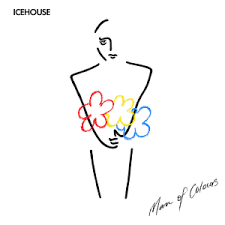
If Primitive Man announced Icehouse’s arrival, Man of Colours was their victory lap. The album peaked at #1 on Australian album charts for 11 weeks and sold over 1 million copies, becoming the first Australian album to supply five Top 30 hit singles..
This was Icehouse at their most accessible, but accessible didn’t mean compromised. “Electric Blue,” co-written by Davies and John Oates of Hall & Oates, reached #7 on the US Billboard Hot 100. The song’s shimmering production and irresistible hook made it impossible to ignore—MTV played it constantly, and for good reason. “Crazy” followed, reaching #14 in the US, with its driving rhythm and anthemic chorus perfectly capturing the optimistic energy of late-’80s pop-rock.
The album was released on three limited edition colored vinyl pressings matching the colors of flowers on the cover; a beautiful detail that showed the band’s attention to the complete artistic package. The cover itself was vibrant and eye-catching, reflecting the album’s more colorful, pop-oriented sound compared to their earlier work.
Man of Colours represented the commercial peak of Icehouse’s career, proving that Davies could master the MTV era without losing his artistic identity. The album balanced radio-friendly singles with deeper album tracks, maintaining the sophistication that had always defined the band while embracing the possibilities of contemporary production.
It’s the songs that weren’t hits, that stand out the most. Take the title track “Man of Colours”. I can hear it on Pet Shop Boys’ album Behaviour, it matches the tone and mood, and I can hear Neil Tenant’s voice. I think it’s one of Icehouse’s most emotional song to date.
This album is important in the soundtrack of my youth. I had just heard The Smiths, I was obsessed with The Cure, but most of all I was a die-hard fan of Pet Shop Boys, New Order and Depeche Mode. New Wave synth pop was my drug of choice, and Icehouse fit neatly into that for me.
Legacy
The band made a couple more albums in the 90s. Then, finally received the highest honor from the Australian Music Industry. They are now properly recognized as legends in their home country and still tour. They have toured doing full sets of an album, and having seen the clips on YouTube, Iva can still hit those notes. The band is still as tight and powerful as ever.
They capture a moment in time for me. But the songs of theirs that resonate, defy borders and boundaries, and time. They uplift, they are full of passion.
One of their last albums was in 1995 and it was a covers album.
Ranging from bands like PiL, Killing Joke, to Lou Reed, Velvet Underground, Simple Minds, XTC, and The Cure.
Before You Go
Thank you for reading [this spotlight/this review/this deep dive].
If this piece moved you, taught you something new, or reminded you why music still matters, please consider sharing or restacking it. These stories deserve to be told — and remembered.
Coming Up Next:
My favorite albums of 2025.
Missed last week?
Catch my spotlight on the early experimental years of The Simple Minds.
Leave a like and tell me in the comments:
Did you know Icehouse before “Electric Blue”? Have you explored their experimental early years, or is this all new to you? I’d love to hear your thoughts.
Not a subscriber yet?
This is the kind of ambitious, deeply researched work I want to continue creating. Subscribe so you don’t miss future deep dives and music explorations.
Support This Work:
This series represents months of research, writing, and revision. If it added value to your life, please consider supporting via Buy Me a Coffee (one-time payment of any amount) or by becoming a paid subscriber. Your support keeps independent music writing alive.
This really brought things back for me. Icehouse were always present in my youth, but your writing made me hear them again with the full weight of memory attached—places, moments, and that feeling of discovery. It’s amazing how the right words can reopen doors you didn’t know were closed. I’m genuinely grateful for this piece; it reminded me why this music mattered then, and why it still does now.
Some good stuff after changing their name. However, my favourite is still the album Icehouse, released when they sill went by Flowers. I bought the album not long after it was released.