
5 Bands - 5 Compilations
Charting the '80s Singles Compilations That Built a Musical Subculture

Welcome back Hi-Fiers,
After focusing on some important albums, this week I take a 50 foot view of the music scene and the industry that shaped my listening habits as a kid.
Growing up in the mid-to-late 80s, the music industry (radio, TV, MTV, pop culture) used marketing and advertising to forcibly influence people’s tastes. Yet, strong trends, subcultures, and followings still emerged that passively rejected those systems. There was music exploding elsewhere around the globe, and Americans who had exposure to that; mostly British and European post-punk, new wave, and synth-pop acts whose albums were expensive imports, would share it with their friends.
These bands and acts began to sell out bigger venues, not arenas, but enough to become a success against music listeners and buyers, despite being kept off the airwaves, not “hot enough” for MTV, or too strange for whatever metric radio had. There were a few outliers: KROQ in Los Angeles, DC101 in Washington D.C., KSAN in San Francisco, and stations like WNEW-FM in New York were championing the music that commercial radio ignored. Either by fluke, a single song hitting mainstream radio, or a movie director using the music in their film, a couple of these bands would get one or two hits. However, their albums would still not be distributed or sold in the major US market, forcing diehard fans to special order them and pay a premium for “imports”.
The Compilation Phenomenon: A Lifeline for the Fans
This lack of distribution created a phenomenon in the mid-to-late 80’s: the singles compilation. These were not “best of” or even “greatest hits” albums, as none of these bands had charted high enough on Billboard. In most cases, the bands were not involved at all. It was purely a commercial decision by a record label that didn’t want to risk purchasing the rights to an entire back catalogue but knew fans wanted the music. They would compile and release an album with chronological singles.
Many bands could have used this to their advantage, but didn’t (The Church), or when they did (The Church), it was too late, having passed the time they were in the consciousness of casual fans. For me, as a high school kid who couldn’t afford to special order a band’s entire back catalogue via import, these albums were essential to my music education.
Essential Compilations
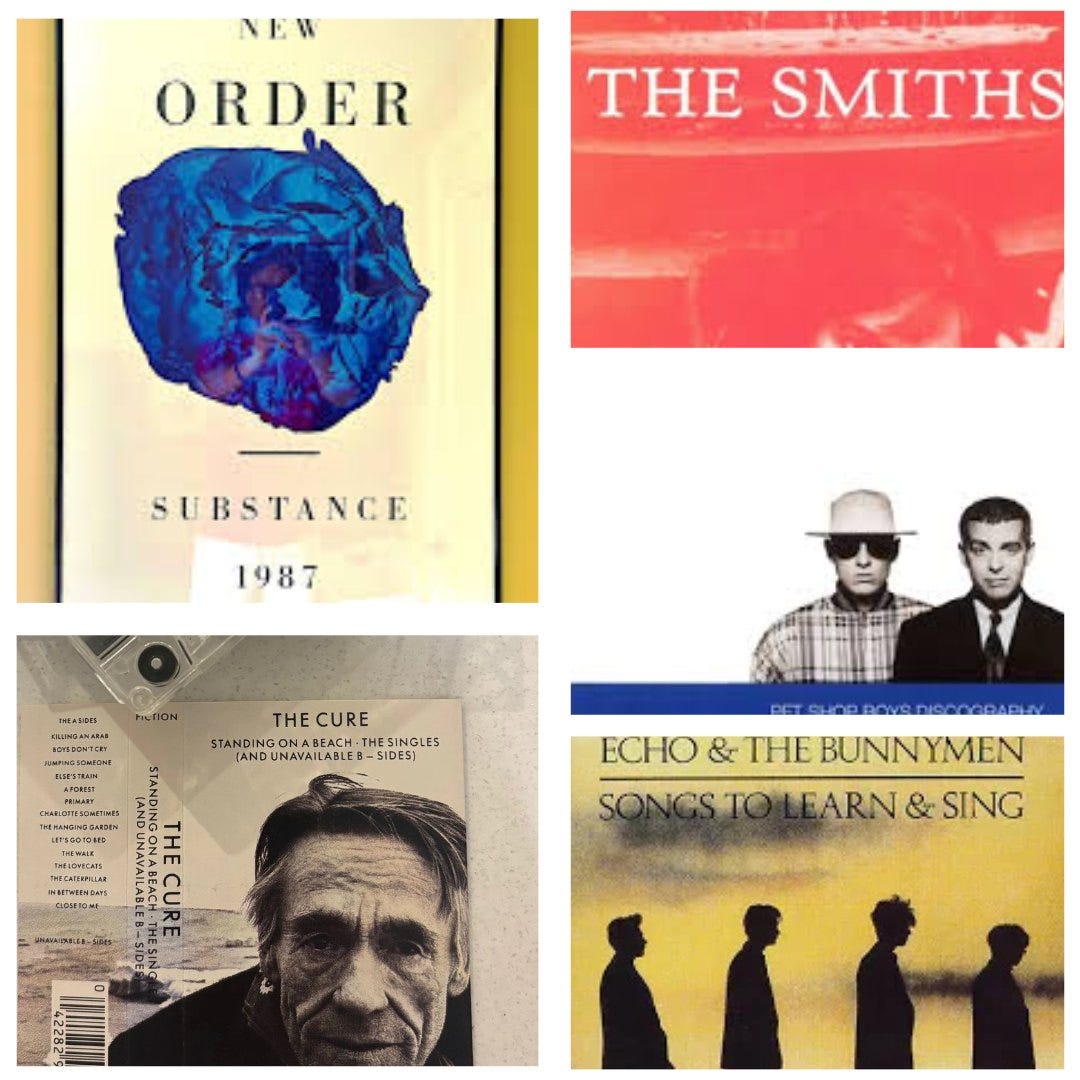
New Order - Substance
More than any of the other bands in this list. This was one British, post-punk/new-wave/synthpop band that had established itself not only in the underground culture of US kids. But legendary on the dance-floor. They had already pioneered house music. They already had a legendary best-selling single of all time (“Blue Monday”), plus their last 2 albums, were inspiring Hollywood filmmakers, they were being heard in soundtracks.
This compilation was a genius play on many fronts.
New Order, since their Joy Division days, co-founded their own record label Factory. Had their own nightclub Hacienda, which was legendary, in the UK but instrumental in every Manchester music scene and genre to emerge during its existence.
Around this time, New Order had let down expectations with their previous album Brotherhood, their first album on the US (Quincy Jones owned) record label Qwest records. Their own record label back home was on the verge of bankruptcy due to their most volatile act on the label The Happy Mondays. The Hacienda was on the verge of collapse (financially). Joy Division / New Order patron, co-founder, manager, and primary investor of The Hacienda, primary investor and owner of Factory records, Tony Wilson had a brilliant idea.
Since their formation amongst the ashes of Joy Division, New Order were NOT an album band.
Their albums never sold well. Their albums never had a cohesive theme or concept. Their albums were anonymous. Cryptic, artsy covers, without any self-identification.
What had always worked for New Order were their singles. They exploded in nightclubs. The best example being "Blue Monday". But even before that, mourning the death of Ian Curtis, the band had released "Ceremony". Shortly after that, "Temptation" became a club hit, despite Movement being a colossal failure commercially. There was a pattern. In the same year, they’d release a single or singles, and they’d make waves. Yet an album released in the same year wouldn’t get any buzz.
Tony Wilson knew that New Order, at their best, was a singles band. The singles had already proven themselves in the UK and on the dancefloors and the nightclubs of the US. They had enough to not only fill one album, but a double-album. No one but Tony saw the brilliance of this. The band was ambivalent towards it, the record company didn’t care either way, and figured it was a good way to get the Factory back catalogue out there.
But Tony’s vision was that he was certain that if these singles were exposed to the mainstream music listening audience, it would be huge.
Tony Wilson, always felt deep regret that Ian Curtis never lived to see the success of Joy Division, and that the US was cheated (by his suicide) of ever seeing them live. So as a sister to this album he also curated a Substance album for Joy Division. It was not as extensive, I still wish he had realized his full vision, a 2 disc version like New Order. With a 2nd Disc of b-sides. Instead it was a single album, featuring all their singles. It’s legacy is having the extended single version with extra verse, for "She’s Lost Control". It also exposed a whole legion of kids in the late 80’s of hearing the song "Atmosphere" for the first time. When I heard it, it felt like it was a single newly recorded.
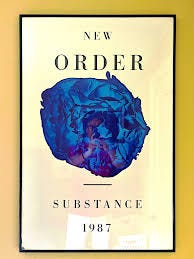
As always the cover art was by Peter Saville in his trademark minimalist style. The original concept for the album was the blue opening Peonie, and just the year 1987. This lent a mystique to it, the album as an art piece in a gallery. It was the first and only album, until many years later, to feature the band name on the front. This alone helped US fans who already knew about them find their music easier in record stores.
This album featured all their singles, but specifically the 12” dance versions or extended versions of all the song.
The CD was a double-disc. Disc 1 featured the singles, included re-recorded versions of "Temptation", "Confusion", along with a brand new single "True Faith".
Disc 2, was all the b-sides from the Disc 1 singles. For a kid in America, this was a real coup, because for the price of an album, you got 7 years worth of hit dance singles and b-sides. Which up until then had been near impossible to find in the US, and had to be special ordered, via import, and that would mean ordering 12 separate singles at a premium price, not to mention the very high import fees.
This album, for me, was the bridge during a crucial age. A bridge that I crossed, from mainstream pop music, pop rock, Top 40 music, to alternative, indie post-punk. By way of dance music. The first few tracks on Disc 1, were the most experimental synth, in the same vein as early Ultravox, early Simple Minds, early Icehouse, Kraftwerk, and even Sparks. These first few tracks, albeit synthpop, had the darkness of Joy Division, without the missteps of (debut album) Movement. You can listen to "Everything’s Gone Green", and "Procession", and there’s a dark Joy Division atmosphere about them, but you can clearly here the 90’s electronic scene. There are the embryonic seeds of 808 State, Orbital, Orb, and Underworld if you listen close enough. That and then my favorite early New Order song "Thieves Like Us", there was something about being an out of place freak, that made me feel that the song created a universe where I belonged somewhere.
Finally, the master stroke of adding their brand new single. Rather than add it to an extended version of Brotherhood, or even tie the single to that album. "True Faith", was the new featured single on this album. With a b-side, that is better than most bands’ album tracks "1963".
On release, this was New Order’s most successful album, making the Billboard Top 40. Unlike the past when they only ranked in the dance charts. Their new single "True Faith", also reached the Top 40, their most successful single to date.
Eventually this became New Order’s best-selling album in the US, becoming certified platinum.
Echo and the Bunnymen - Songs to Learn and Sing
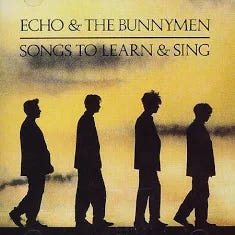
When I was a kid growing up in the 80’s. Echo and the Bunnymen, were name-dropped if you wanted to sound cool. Usually it was the kids with older siblings or older cousins, that had the mystique of Christian Slater’s character in the movie Heathers. Long dark trenchcoat. Echo and the Bunnymen were the mysterious, long, dark, trenchcoat, British guys, with a deep baritone voice.
What was Echo. Who were the Bunnymen.
In 1985 the movie Pretty In Pink, exposed many of these British bands to US audiences and kids. Legend has it that Molly Ringwald had excellent taste in the emerging music scenes in England, and having a good relationship with the director John Hughes. She would share a lot of her music interests with him, and helped shaped his understanding of what the younger cool kids would want to listen to. A few of her favorite bands, that she played incessantly for him were, New Order, The Smiths, Simple Minds, The Cure, OMD, and Echo and the Bunnymen. Three of them, New Order, Simple Minds, and Echo and the Bunnymen, wrote and recorded songs specifically for the soundtrack. That is how the world got "Bring on the Dancing Horses". Just like "True Faith", was the newly recorded single released on Substance. "Bring on the Dancing Horses", was the only new single released on Songs to Learn and Sing.
The story of their lack of exposure in the US is almost identical to the New Order story above. I had older, cool cousins, which is how and where I would hear their name being dropped. But I could never find any of their albums, and as a 12 or 13 year old, I didn’t even know where to start, if I did ever find a record of theirs.
Once I saw Pretty In Pink, the only song that stood out to me was "Bring on the Dancing Horses", it was and is my favorite song on that soundtrack. Ian McCulloch’s voice and songwriting is very much in the vein of Leonard Cohen. He tells a three part story. Each verse is a different scenario. But the thread tying it all through, is that whatever relationship that is being described will fall apart.
This compilation was also my spirit guide into Echo and the Bunnymen’s discography. A post-punk band, with 2 minute songs, that didn’t sound like the Ramones. But rather like a cinematic piece, somehow. The Indian sounding strings in "The Cutter". The guitar part of "The Puppet", eerily sounding like U2 must have ripped them off when they wrote "I Will Follow". But the greatest gift of all. This exposed the world to the haunting brilliance of "The Killing Moon".
This album was the soundtrack to all my roadtrips in my early teens.
The Smiths - Louder than Bombs
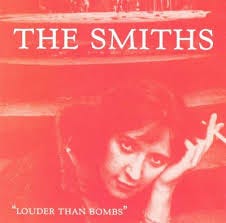
There is a lot to say about this band. To sound disgustingly cliched, they saved my life. The music is in my DNA, the lyrics are in my blood. Feeling like I didn’t belong anywhere. My mother had just bought me my first guitar, and I bought a couple of books to teach myself. Learning chord fingerings and scales. I was probably in middle school, and my elder sister who was in high school had one of her friends come over who was carrying a plastic bag with several records. The one that stood out was an orange album with a lady sitting somewhere in a residential street somewhere in England. That instantly took me back to where I was from. I loved the aesthetics of the album, the gatefold sleeve, and just reading the lyrics. The song that immediately reached out and grabbed me was “Please, Please, Please Let Me Get What I Want…”.
Anyone can read that song title immediately connect it to their own personal circumstance. Lyrically, it’s up there with “You Can’t Always Get What You Want” (The Rolling Stones). A title just as long, and a theme just as brilliant. But the difference was, a mandolin in a rock song? In a post-punk, new-wave, alternative album? I wasn’t into my parents’ music back then. The Stone, The Beatles, Van Morrison, CSNY, that was music for people in nursing homes. I mean that is what my 13-14 year old self believed. But that mandolin plucked my heartstrings.
At the time, the other songs that grabbed me immediately were: “London”, “Panic”. I was into punk music at the time, and these were the most punk-rock songs on the album. But “London”, to this day, evokes all the nostalgia. Landing, arriving in London, or taking off and leaving, evokes the themes in that song to me.
“....really ragged notion that you’ll return home…. Do you think you’ve made the right decision this time?”
“Panic”, was iconic for me, “hang the dj” became my mantra.
“The music that they constantly play, says nothing to me about my life…”
That’s exactly how I felt, I hated the radio and the songs played on there.
“Ask” was my favorite song at the time. It was telling me to do what I was afraid to do. Living a life on the fringes, bullied, not fitting in. It was telling me to go out and live life without fear.
The brilliance of this album, is that hardly any song on here is an A-side of a single. This is an album of B-sides. Which in any other era would be an album of obscurities. However, this too exposed a legion of young kids my age in America, who would listen to this album (Brandon Flowers) and go on to become Alternative music icons. But this album was the only gateway to the Smiths at the time. Then set the scene for their final album Strangeways Here We Come to become more widely accessible.
Incidentally this became The Smiths’ most successful album in the US at the time, charting in the low end of the Billboard 200.
As time went on, the rest of the songs became my most favorite Smiths songs, and I learned guitar essentially by attempting to (sometimes successfully, sometimes still not) learn the songs that I loved on here.
Pet Shop Boys - Discography
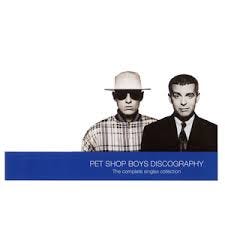
This album entered my life at a time when I had adopted my most angsty, gate-keeping, and opinionated self. The Church obsession was fully in my bloodstream; Joy Division was the Alpha/Omega, and anything else was only "cool" if it was strictly punk, goth, or synth-electro-pop.
I was familiar with and a fan of tracks from their earlier albums, but I didn’t own any of their LPs. Although albums like Please had already gone platinum in the US, making their music widely available in stores (unlike the import acts), there was a different kind of barrier: a prevailing, toxic culture that policed what music was acceptable. My open love for British synth-pop bands like New Order and Depeche Mode often made me a target, and the Pet Shop Boys were at the top of the list for being branded with homophobic slurs. The danger associated with openly liking their music created a necessary hesitation.
Discography was the first Pet Shop Boys album in my house, and it immediately provided all the songs I knew and loved from Please, Actually, Introspective, and Behaviour. By fans as well as other music lovers, this stands as THE definitive Pet Shop Boys albums. At least in the US. As I mentioned in previous posts, it has been well documented that they were mainstream already in the UK and Canada. But through the years, even acquaintances who weren’t fans, per se, of the Pet Shop Boys, if they had only one album, Discography was it.
The brilliance of this album is that it picks iconic songs, whether calculated, by luck or by the sheer fact that, these just happened to be the singles. From each album, this picks the best and most iconic songs from those albums. To anyone, even the casual listener, if you were to own any Pet Shop Boys album. This is it.
The album charted well globally but struggled in the US, where the record label pigeonholed them into an underfunded sub-department for "gay" music, severely limiting their mainstream marketing and wider acceptance.
This compilation is important not just because it was widely available and inspired many casual listeners and kids, but because it exposed the absurdity of the US music industry's prejudice. In the decades that followed, the industry began to accept their influence, with artists like Brandon Flowers of The Killers publicly vocalizing the Pet Shop Boys’ contributions to music.
The Cure - Standing on a Beach/Staring at the Sea
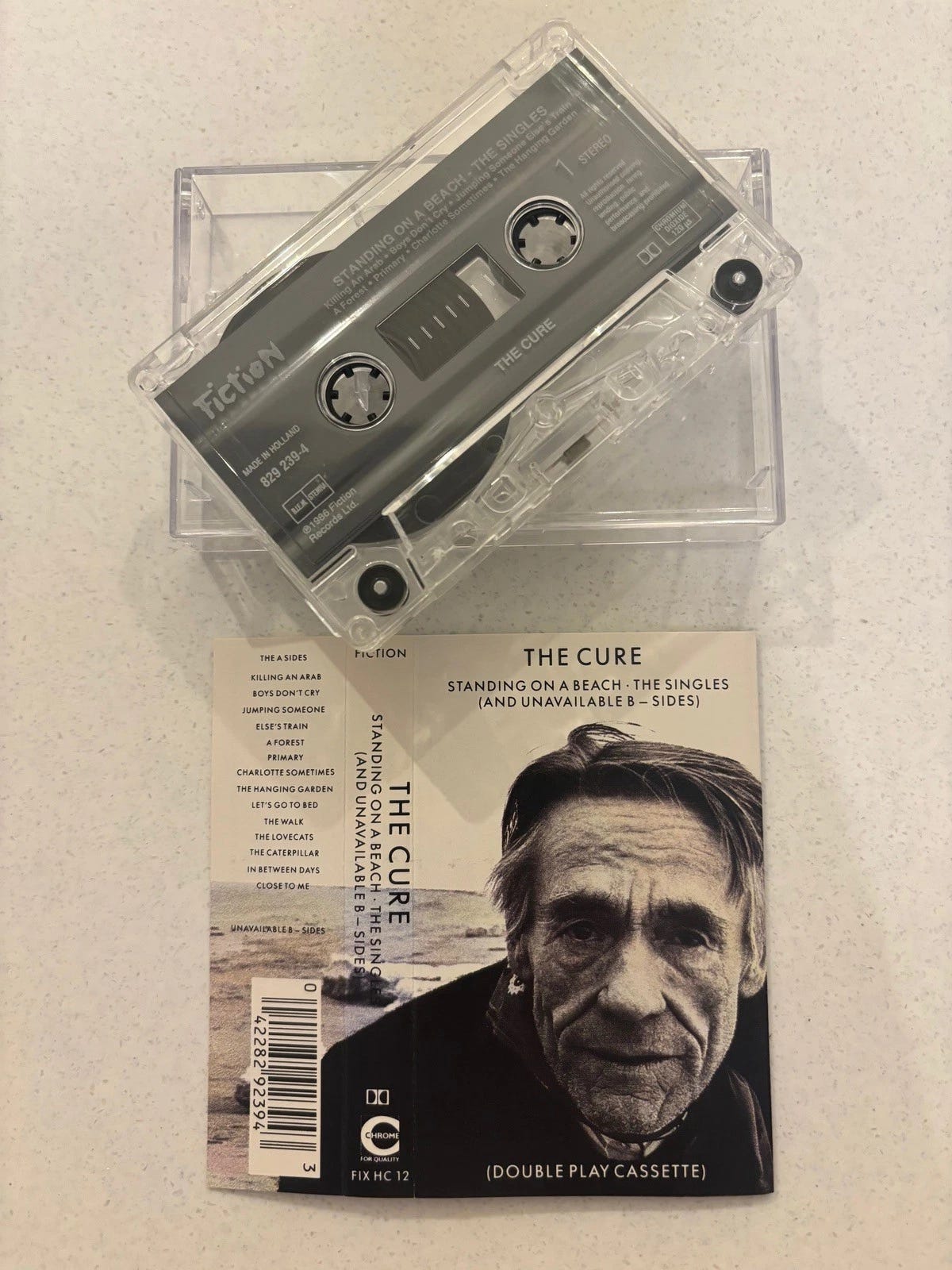
For me, The Cure was a fluke discovery, a band the American corporate music machine seemed intent on blocking. My entry point was staying up late to watch MTV’s 120 Minutes, where I stumbled upon the video for "In Between Days". It was a pivotal moment: discovering music that resonated deeply, away from the Top 40 charts. The threat of being dismissed by the mainstream only deepened my commitment to the band, as the music became a secret source of emotional connection and escape, especially during the angsty years of middle and high school.
Like the other bands on this list, most of The Cure's back catalogue and singles were cost-prohibitive imports. The 1986 singles compilation Standing on a Beach/Staring at the Sea was a godsend. My sister or I purchased the cassette version, which proved to be a goldmine. The tape not only featured all the A-side singles from their 1979 debut up through 1986 but also included all the B-sides and tracks from their EPs; material that was otherwise nearly impossible to find in the U.S.
This compilation provided the full, chronological range of The Cure’s genius, from their early punk years to their iconic 80s synth-pop and goth incarnations. It was the essential collection that introduced a legion of American teens to the band. Eventually, The Cure became a staple on 120 Minutes, and their concerts began selling out without a single song played on major commercial radio, eventually packing venues like Madison Square Garden by the time Disintegration was released.
Further Listening: Honorable Mentions
Here are a few other compilations that were essential to my music education as a high school kid, even if they didn’t perfectly fit the import-only narrative:
OMD - The Best of OMD: Another U.K. synth-pop band whose previous albums were difficult to access. This compilation was a necessary entry point.
Depeche Mode - People Are People: Though the single was played on local radio, this compilation album was an immediate purchase that exposed me to classics like “Get the Balance Right” and “Everything Counts,” which remain among my favorites.
Talk Talk - Natural History: The Very Best of Talk Talk: This compilation is controversial because it was released without the band’s input and was condemned by them. However, at the time I bought the North American CD with its bonus tracks, most of Talk Talk‘s back catalog was out of print. It exposed me to songs from Spirit of Eden and was my gateway to hunting down their rare material.
Before You Go…
Thank you for reading [this spotlight/this review/this deep dive].
If this piece moved you, taught you something new, or reminded you why music still matters, please consider sharing or restacking it. These stories deserve to be told — and remembered.
Missed last week?
Read my deep-dive into Peter Gabriel’s ground-breaking album So
Not a subscriber yet?
This is the kind of ambitious, deeply researched work I want to continue creating. Subscribe so you don’t miss future deep dives and music explorations.
Support This Work:
This series represents months of research, writing, and revision. If it added value to your life, please consider supporting via Buy Me a Coffee (one-time payment of any amount) or by becoming a paid subscriber. Your support keeps independent music writing alive.
This really resonated with me. I love the way you frame these compilations not as disposable “best ofs,” but as entry points into entire worlds that were otherwise difficult, expensive, or culturally policed out of reach.
That distinction matters. For those of us who came up through physical media, record shops, imports, cassettes, borrowed albums, and partial access, discovery was not frictionless. The friction was part of the education. A compilation could become a map, a key, or sometimes the only realistic doorway into a band’s internal universe.
The Smiths section especially hit home for me. Growing up in England, then carrying those references through later moves and different versions of myself, I understand that strange feeling of a song or sleeve suddenly reconnecting you to place, class, weather, streets, and emotional geography. That is not nostalgia exactly. It is recognition.
I also appreciated the Pet Shop Boys section. The point about taste being policed is important. Some music was dismissed not because it lacked value, but because the surrounding culture was too narrow, insecure, or prejudiced to hear it properly.
As someone who still thinks in albums first, I found this a lovely reminder that compilations can also be serious listening documents. Sometimes they are not the end of the story. They are where the story begins.
Great article! I loved all of these.
Two more that I wore out are
- Squeeze Singles: 45s and Under
- XTC Waxworks: Some Singles